PAC Intelligence — The Book
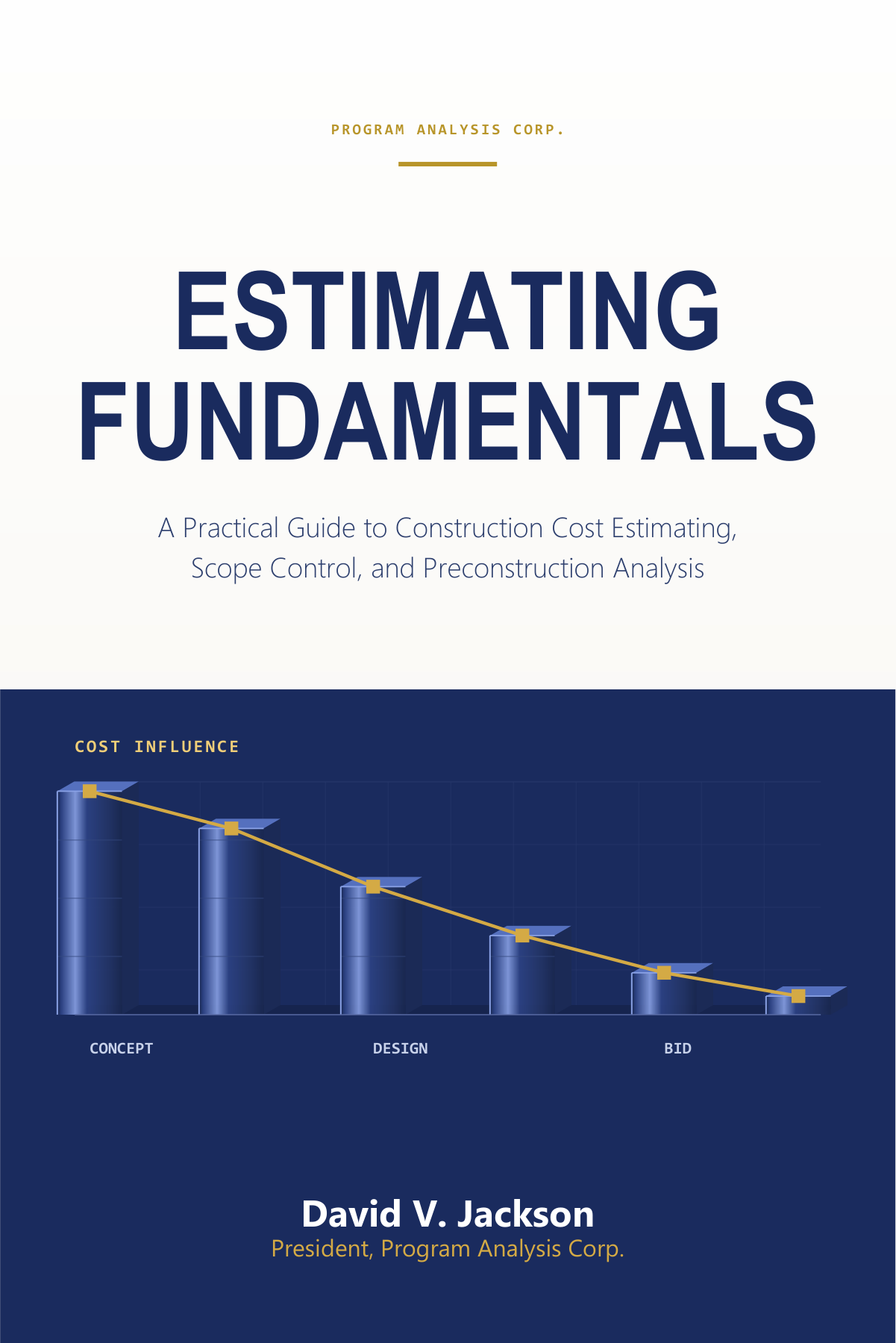
Estimating Fundamentals
A Practical Guide to Construction Cost Estimating,
Scope Control, and Preconstruction Analysis
Before a project is built, financed, bid, awarded, or changed, someone has to develop a reasonable opinion of what the work is likely to cost. This is a clear working guide to the thinking behind a responsible construction estimate — scope, quantities, pricing, assumptions, exclusions, and risk, in the order real estimating work happens.
David V. Jackson — President, Program Analysis Corp. 39 years across general contracting, construction management, development, and owner's representative work.
In print — shipping now
Paperback — First Edition
$49.95
87 pages · 6" × 9" · printed and shipped by Lulu
Six chapters, each closing with review questions and a hands-on exercise — so it works as a classroom text, a training-program text, or for self-study.
Buy the paperback →
Opens Lulu's checkout in a new tab. The book is printed to order and shipped by Lulu — payment and delivery are handled there.
See what's inside ↓
What's inside
Six chapters, in the order
the work actually happens.
First the book explains what estimating really is. Then scope review, quantity takeoff, pricing, and final estimate review — and then it builds one complete estimate end to end so you can see every step land in the same job.
01
What Construction Estimating Really Is
What an estimate is — and is not. The types of estimates and where each belongs on the project timeline. Why scope comes before price, how delivery method changes the estimate, and what the estimator is actually responsible for.
02
Understanding Scope Before Pricing
Reading drawings and specifications for estimating. Breaking a project into building systems, CSI and Uniformat organization, scope by trade responsibility, alternates and owner-furnished items — and finding the scope gaps before they become change orders.
03
Quantity Takeoff Fundamentals
Organizing a takeoff so the quantities stay traceable. Gross area, net area, and the quantities that matter. Working with incomplete drawings, waste factors, renovation conditions and productivity — plus a takeoff review checklist.
04
Pricing the Work
From quantity to cost with unit pricing. Labor, material, and equipment. Productivity, labor conditions, subcontractor pricing and bid leveling, then general conditions, overhead, profit, and contingency — with a worked line-item example.
05
Estimate Review, Risk, and Cost Control
Reviewing scope, quantities, and pricing. Assumptions, exclusions, and risk. Bid leveling, value engineering, change order and pay application review, estimate updates — and the ethical responsibility that comes with software and AI.
06
Putting It All Together: A Worked Example
One project carried through all six steps — scope review, takeoff, pricing, cost summary, written assumptions and exclusions, and the review — ending with the completed estimate at a glance and what the example demonstrates.
ConclusionWhat a good estimate really is, and what to do next.
Glossary of Estimating Terms37 terms in plain English — from addendum and allowance to value engineering.
About the AuthorWhere the material comes from, and how to reach PAC.