Home Services PAC Intelligence ScopeGen Takeoff Studio Estimating Fundamentals Coming soon CostGen TakeOffGen SchedulingGen About Contact
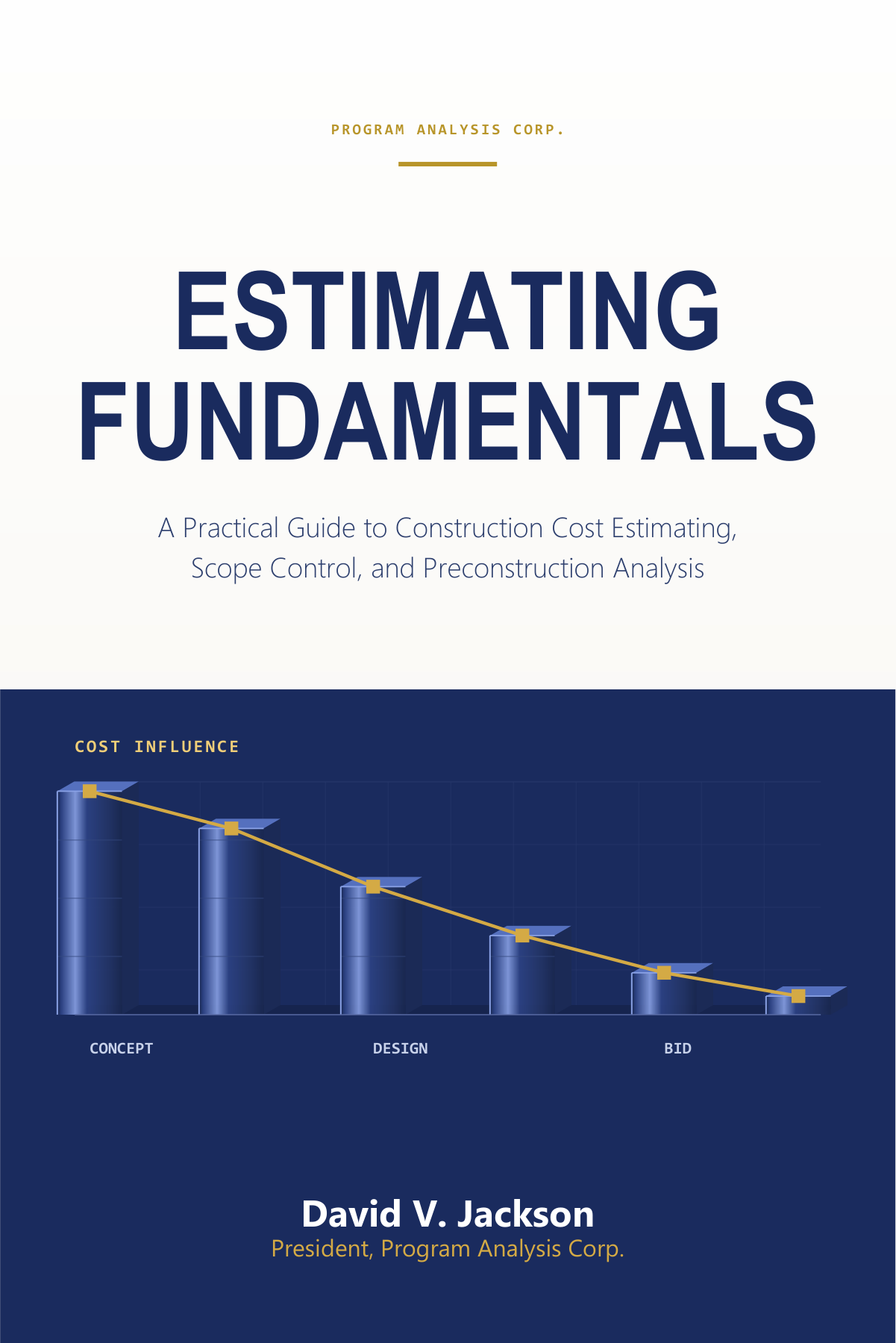
Estimating Fundamentals — front cover

PAC Intelligence — The Book

Estimating Fundamentals

A Practical Guide to Construction Cost Estimating,
Scope Control, and Preconstruction Analysis

Before a project is built, financed, bid, awarded, or changed, someone has to develop a reasonable opinion of what the work is likely to cost. This is a clear working guide to the thinking behind a responsible construction estimate — scope, quantities, pricing, assumptions, exclusions, and risk, in the order real estimating work happens.

In print — shipping now

Paperback — First Edition

$49.95

87 pages · 6" × 9" · printed and shipped by Lulu

Six chapters, each closing with review questions and a hands-on exercise — so it works as a classroom text, a training-program text, or for self-study.

Buy the paperback →

Opens Lulu's checkout in a new tab. The book is printed to order and shipped by Lulu — payment and delivery are handled there.

See what's inside ↓
Estimating is not just pricing

That is the sentence the whole book rests on. Estimating is the disciplined process of understanding scope, measuring quantities, applying reasonable pricing, documenting assumptions, recognizing exclusions, and identifying risk — before construction money is committed. Price is the last step, not the job.

Written from the work, not from a syllabus

The chapters follow the same sequence a real estimate follows. Every chapter carries definitions, practical principles, the mistakes that actually get made, an estimator's judgment note, review questions, and an exercise you can do on a live project.

The fundamentals behind the tools

Software measures and prices faster than anyone can by hand. It cannot tell you whether the scope is complete or the assumption is defensible. This book is the judgment layer underneath Takeoff Studio and ScopeGen — and underneath any tool you use.

Six chapters, in the order
the work actually happens.

First the book explains what estimating really is. Then scope review, quantity takeoff, pricing, and final estimate review — and then it builds one complete estimate end to end so you can see every step land in the same job.

01

What Construction Estimating Really Is

What an estimate is — and is not. The types of estimates and where each belongs on the project timeline. Why scope comes before price, how delivery method changes the estimate, and what the estimator is actually responsible for.

02

Understanding Scope Before Pricing

Reading drawings and specifications for estimating. Breaking a project into building systems, CSI and Uniformat organization, scope by trade responsibility, alternates and owner-furnished items — and finding the scope gaps before they become change orders.

03

Quantity Takeoff Fundamentals

Organizing a takeoff so the quantities stay traceable. Gross area, net area, and the quantities that matter. Working with incomplete drawings, waste factors, renovation conditions and productivity — plus a takeoff review checklist.

04

Pricing the Work

From quantity to cost with unit pricing. Labor, material, and equipment. Productivity, labor conditions, subcontractor pricing and bid leveling, then general conditions, overhead, profit, and contingency — with a worked line-item example.

05

Estimate Review, Risk, and Cost Control

Reviewing scope, quantities, and pricing. Assumptions, exclusions, and risk. Bid leveling, value engineering, change order and pay application review, estimate updates — and the ethical responsibility that comes with software and AI.

06

Putting It All Together: A Worked Example

One project carried through all six steps — scope review, takeoff, pricing, cost summary, written assumptions and exclusions, and the review — ending with the completed estimate at a glance and what the example demonstrates.

ConclusionWhat a good estimate really is, and what to do next.
Glossary of Estimating Terms37 terms in plain English — from addendum and allowance to value engineering.
About the AuthorWhere the material comes from, and how to reach PAC.
You do not need to be an expert
to begin.

■
New estimators

Who need a practical starting point rather than a reference tome.

■
Small contractors

Who want to understand their own estimates and bids more clearly.

■
Project managers

Who have to review cost information carefully and defend it.

■
Owners, developers, and owner's representatives

Who want to understand how the numbers in front of them were built.

■
Students and professionals entering construction

Including instructors looking for a text with built-in questions and exercises.

■
Technology and AI users

Who want the estimating fundamentals behind the tools they already run.

Every chapter closes the same way

Definitionsthe terms, used correctly
Practical principleswhat holds up on real work
Common mistakeswhat actually goes wrong
Estimator's judgment notethe call only a person can make
Chapter summarywhat to carry forward
Practical review questionsfor class or self-check
Practical exercisedone on a real drawing set

The book

TitleEstimating Fundamentals
AuthorDavid V. Jackson
EditionFirst Edition, 2026
PublisherProgram Analysis Corp.
Contents6 chapters, worked example, 37-term glossary

The edition

FormatPaperback, perfect bound
Pages87
Trim size6" × 9" (US Trade)
ISBN979-8-234-24778-0
Price$49.95 USD

Before you order.

Is this a beginner book or a reference book?

A beginner book, deliberately. It builds a useful foundation you then improve through practice, review, and project experience. It is not a cost manual and it is not trying to be exhaustive — it is trying to make you think about an estimate correctly.

Does it contain pricing or cost data?

No. It teaches how unit costs are built and applied — labor, material, equipment, subcontractor pricing, general conditions, overhead, profit, contingency — using worked examples. It does not publish cost tables, which go stale and vary by market anyway.

Can I use it to teach a course?

Yes — that is one of the reasons it is structured the way it is. Each chapter follows an instructional sequence and closes with review questions and a hands-on exercise, so it works for introductory estimating courses, professional development seminars, and in-house training. For classroom quantities, get in touch.

Is it tied to any particular software?

No. Nothing in the book requires a tool to follow, and the exercises can be done on paper. It covers the judgment that has to happen whatever you estimate in — including Takeoff Studio.

Is there a digital edition?

A PDF edition formatted for reading on screen is being prepared. The paperback is what is available today — ask us and we will tell you when the digital edition goes live.

Who wrote it?

David V. Jackson, President of Program Analysis Corp — a construction consulting firm focused on cost estimating, preconstruction planning, and practical technology. 39 years across general contracting, construction management, development, and owner's representative services. More about PAC →

Scope first. Then quantities.
Then price.

87 pages, six chapters, and one estimate built end to end.

Buy the paperback — $49.95